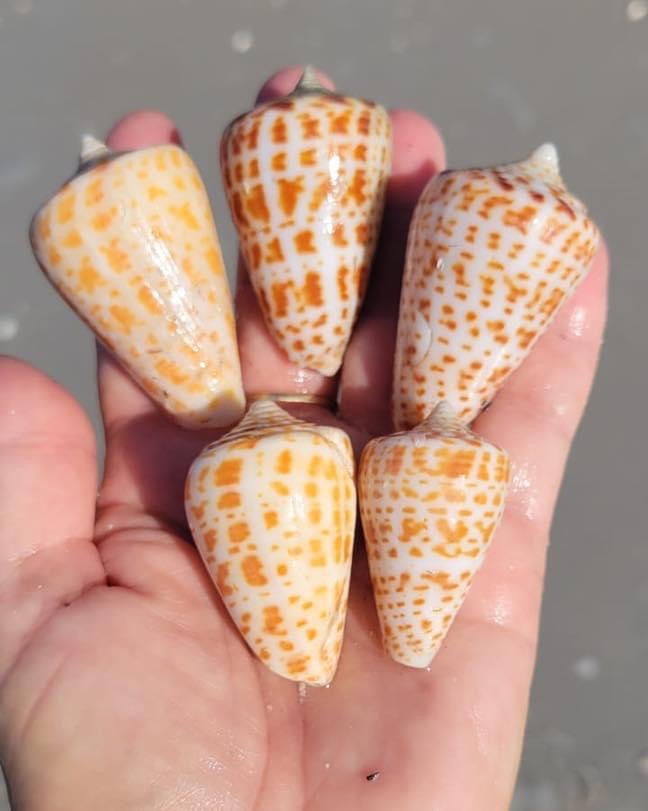
August 2026 Tide Forecast & Shelling Windows
Looking for the August shelling forecast for Marco Island? During August, the lowest water levels of the month often happen in the late afternoon. These low tides pull water off the shallow barrier island shelves, exposing vast stretches of wet sand and tide pools that remain underwater most of the year.
August 2026 Daylight Tides Quick-Guide
-
Early August (Aug 8–13): Super-Low Afternoon Tides (-0.3 ft)
-
Mid-August (Aug 14–18): Morning Window (8:30 AM – 11:30 AM
-
Late August (Aug 24–28): Sunset Falling Tides (0.2 ft to 0.4 ft
-
End of Month (Aug 29–31): Post-Sunrise Lows (8:00 AM – 9:30 AM)
1. The Super-Low Afternoon Stretch (August 8 – August 13)
-
Tide Times: Low tides drop between 4:14 PM and 7:39 PM.
-
Water Levels: Dropping to negative numbers (-0.3 ft on August 10 and 11).
-
Daylight Hours: Sunrise ~6:56 AM – 6:58 AM | Sunset ~8:04 PM – 8:08 PM
-
Why It’s Special: This is the most impressive tide cycle of the month. Low tides dipping below zero drain the passes and tidal flats, leaving behind temporary islands and mudflats.
-
Pro Tip: Step onto the outer barrier islands 2 hours before the lowest tide so you can follow the water as it recedes, revealing untouched shells right as they break the surface.
2. The Mid-Month Morning Window (August 14 – August 18)
-
Tide Times: Low tides occur between 8:30 AM and 11:31 AM
-
Water Levels: Ranging from 0.6 ft to 0.8 ft
-
Daylight Hours: Sunrise ~6:59 AM – 7:01 AM | Sunset ~8:00 PM – 8:03 PM.
-
Why It’s Special: If you prefer beating the afternoon humidity and summer rain showers, this morning cycle is ideal. Water levels drop steadily throughout the morning, giving you comfortable, early-day conditions along the wrack lines.
3. Sunset Falling Tides (August 24 – August 28)
-
Tide Times: Low tides ranging from 0.2 ft to 0.4 ft between 5:44 PM and 7:58 PM
-
Daylight Hours: Sunrise ~7:03 AM – 7:05 AM | Sunset ~7:50 PM – 7:54 PM.
-
Why It’s Special: As the sun dips over the Gulf of Mexico, cooling sea breezes roll in right as the tide reaches its lowest point. Exploring exposed sandbars during this golden-hour drop offers some of the most scenic conditions of the year.
4. End-of-Month Morning Sweep (August 29 – August 31)
-
Tide Times: Low tides drop from 8:09 AM to 9:28 AM
-
Water Levels: 0.4 ft to 0.8 ft.
-
Daylight Hours: Sunrise ~7:05 AM – 7:06 AM | Sunset ~7:47 PM – 7:49 PM
-
Why It’s Special: Early risers will appreciate these morning tides pulling back right after dawn. It’s a great window to search for smaller treasures nestled in the damp sand before the heat builds up
Summer Shelling: What You Might Find
Warm summer water accelerates growth and activity for many Southwest Florida marine mollusks. Strong westerly squalls and tidal rushes frequently roll empty shells out of deeper waters and deposit them onto shallow barrier island beaches.
Here are three iconic species to keep an eye out for this month, with insights based on authoritative biological data from the Bailey-Matthews National Shell Museum & Aquarium:
1. Florida Fighting Conch (Strombus alatus)
-
Habitat & Depth: Shallow subtidal waters, sandy bottoms, and seagrass beds from the intertidal zone down to moderate depths.
-
Diet: Herbivorous grazers that feed on microscopic algae, detritus, and marine plants along the seafloor.
-
Life Cycle & Predators: They lay egg strands in soft sand. Juveniles look surprisingly different from adults—their shells are smooth, slender, and etched with fine spiral lines, while adults develop thick outer lips and heavy shoulder spines. Large predators like horse conchs and blue crabs feed on them.
-
Why They Wash Up: Summer currents and wave action frequently lift empty, discarded fighting conch shells out of shallow grass beds and roll them onto sandbars.
-
Identification & Misidentifications: Adult shells feature a rich mahogany, orange, or mottled brown color with a smooth, heavy aperture notch near the base. Beginners sometimes confuse them with crown conchs, but fighting conchs lack the sharp, crown-like row of pronounced spines along the upper spire.
-
Local Hotspots: Frequently spotted around tidal flats and sandbars near Caxambas Pass and outer barrier islands around Marco Island.
2. Lettered Olive (Oliva sayana)
-
Habitat & Depth: Nearshore sandy beaches, inlets, and shallow sand flats where they burrow just beneath the surface.
-
Diet: Carnivorous predators that use a specialized foot to plow through soft sand, hunting small coquina clams, crustaceans, and marine worms.
-
Life Cycle & Predators: Mantles extend around the outside of the shell to protect it while burrowing, giving the shell its porcelain-like sheen. Birds, stingrays, and predatory crabs hunt them.
-
Why They Wash Up: Because they live right in the intertidal surf zone, tidal pulls during negative low tides uncover their smooth, cylinder-shaped shells along the wet sand line.
-
Identification & Misidentifications: Highly polished, cylindrical shape with a short spire and glossy tan/cream ground color covered in brown, hieroglyphic-like zigzag patterns. Don’t confuse them with the smaller, oval-shaped coffee bean trivias or marginellas.
-
Local Hotspots: Low-tide sand spit edges throughout the Ten Thousand Islands.
3. Lightning Whelk (Sinistrofulgur sinistrum)
-
Habitat & Depth: Shallow estuarine waters, muddy sand flats, and seagrass meadows surrounding oyster bars.
-
Diet: Carnivorous hunters that use their muscular foot to pry open bivalves like quahog clams and oysters.
-
Life Cycle & Predators: Females lay long, leathery egg capsules anchored in the sand that resemble miniature parchment accordions. Larger horse conchs are their primary natural predator.
-
Why They Wash Up: Strong summer wind shifts pull empty whelk shells out of shallow mudflats into the passes, where incoming tides deposit them on point bars.
-
Identification & Misidentifications: The easiest giveaway is its “left-handed” (sinistral) shell opening—when held with the spire pointing up, the aperture opens to the left side. Most other local gastropods open to the right.
-
Local Hotspots: Exposed oyster bars and remote beach points around Marco Island barrier islands.
How to Identify Seashells in Marco Island
Knowing how to identify seashells in Marco Island comes down to observing shape, hinge structures, and aperture orientation rather than relying solely on color (which fades over time).
If you want to sharpen your field identification skills:
-
Examine the Aperture: Look at which side the opening faces and whether the outer lip is thickened or smooth.
-
Check for Hinge Teeth: On bivalves like arks and cockles, the interlocking hinge teeth along the top ridge are a key identifier.
-
Look at the Spire: Spire height and the presence of knobs or spines quickly separate whelks, conchs, and tulips.
To dive deeper into identifying local species and planning your timing around shifting tides, check out our guide on finding the best shelling spots in Marco Island or explore our breakdown of Marco Island shelling tours.
Protecting the Sanctuary: Eco-Friendly Shelling
When visiting Southwest Florida, practicing eco-friendly shelling in Southwest Florida ensures these habitats remain thriving for wildlife and future generations.
-
Never Collect Live Shells: Always check inside every shell you pick up. If an animal is residing inside—or if you encounter a living starfish, sand dollar, or conch—gently return it to the water below the tide line.
-
Mind the Ecosystem: Seagrass beds, oyster reefs, and mangrove shorelines are delicate nursery grounds. Step carefully on shallow flats to avoid disrupting the marine life beneath your feet.
-
Pack It Out: Leave the beaches cleaner than you found them by picking up marine debris along the wrack line.
Experience the Ten Thousand Islands
While public beaches offer fun opportunities for casual strolls, accessing remote sandbars and uninhabited barrier islands requires local water knowledge and vessel navigation through shifting passes.
Joining a guided Ten Thousand Islands shelling tour or booking private shelling tours in Marco Island gives you access to isolated shelling grounds led by local guides with Florida Master Naturalist–level knowledge of local tides, habitats, and wildlife.
Ready to explore the untouched sandbars and hidden barrier islands of our coastal backyard?
Don’t just go — go with Treasure Seekers.
🌊 PRO-LEVEL RESOURCES FOR YOUR ADVENTURE
-
🛍️ Local Gear & Shell Displays: Shore Goods – Coastal Mercantile— Visit the shop at Marco Walk Plaza for sturdy beachcombing gear, shadow boxes, craft kits, and local artisan displays to showcase your treasures.
-
🎥 See the Action: Treasure Seekers YouTube Channel — See real-time conditions on remote sandbars before you step on board.
-
🌊 Local Tide Charts: NOAA Tides & Currents (Marco Island / Caxambas Pass) — Check real-time low tide predictions before planning your trip.
-
🌬 Wind & Weather Forecasts: NOAA Marine Forecast — Monitor wind direction to predict “blow-out” low tides.
-
🐚 Expert Identification: Bailey-Matthews National Shell Museum — The gold standard for identifying native Southwest Florida species.
-
🌿 Explore the Refuge: Ten Thousand Islands National Wildlife Refuge — Learn about the protected marine sanctuary we explore.
-
⚖️ Know the Rules: FWC Shelling Regulations — Review state guidelines for legal and responsible shelling.
-
🎒 What to Pack: Treasure Seekers Packing List — Gear up with essential water shoes, mesh bags, and sun protection.
-
🚤 Plan a Guided Trip: Ten Thousand Islands Shelling Tour — Book a guided excursion to remote barrier islands with expert naturalist captains.
-
🐚 Regional Tides & Shelling Guides: ShellingTours.com — Your go-to hub for Southwest Florida tide strategies, shelling conditions, and regional beachcombing advice.
-
💎 Rare Deep-Water Shell Identification: JunoniaShells.org — Learn the deep-water habitat, weather patterns, and boat-access secrets to finding the rare Scaphella junonia.
-
🎒 Essential Gear & Shell Care: Shellentials.com — Discover recommended mesh bags, sand scoops, reef-safe sun protection, and proper shell cleaning techniques.
-
🚤 Marco Island Departure Portal: MarcoIslandShellTours.com — Explore top-rated local boat charters departing straight from Marco Island and Goodland.
