December 2026 Marco Island Shelling Forecast: Winter Winds, Low Tides & Holiday Adventures
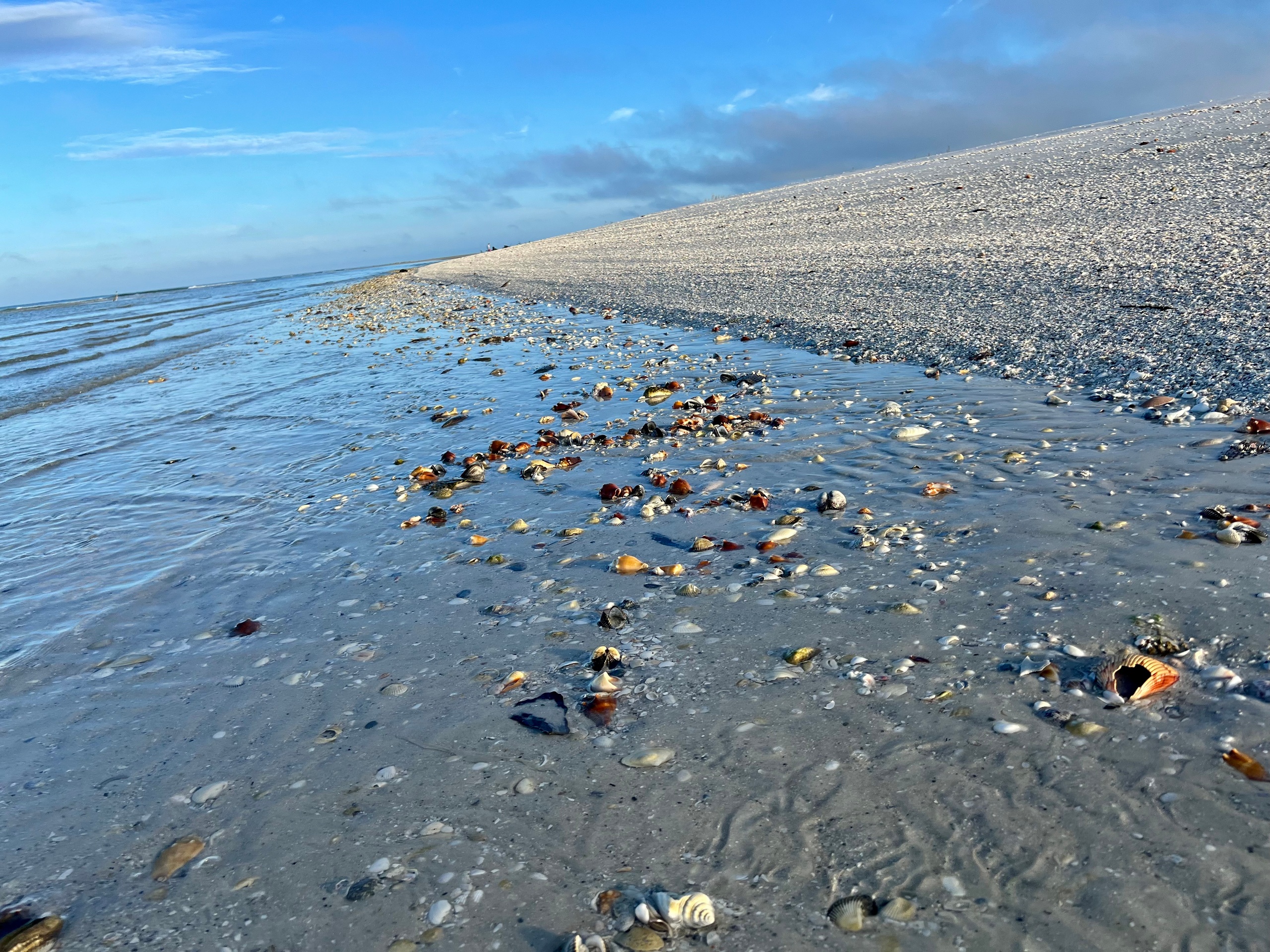
December brings morning low tides, changing winter winds and holiday adventures to Marco Island and the Ten Thousand Islands.
This month features two stretches of negative tides, including predictions reaching −1.0 feet around Christmas. Those low-water windows are exciting, but they’re only part of what makes December worth exploring.
You don’t need the lowest tide of the month to have a memorable shelling trip.
Wind, currents, recent wave action and the location of shell deposits all influence what we find. Sunrise and sunset matter, too: a very low tide before dawn creates a different planning opportunity than one occurring during your time on the island.
Our Marco Island shelling tours combine boat access to remote beaches with local experience interpreting those changing conditions.
Why Winter Winds Matter for Shelling
A tide chart predicts the astronomical tide. Wind and weather help determine the water level we actually encounter.
Sustained offshore winds can move water away from the coast, exposing additional shoreline. Onshore winds can hold water against the beach, keeping actual levels above the prediction. NOAA explains these effects in its guide to how wind and weather affect coastal water levels.
On Gulf-facing shorelines around Marco Island, easterly and northeasterly winds can have an offshore component. Their effect depends on direction, strength, duration and the orientation of each island.
A day with a modest predicted low can sometimes offer more exposed beach than expected.
Recent wind and wave action can also rearrange shell deposits. Conditions before your trip help shape what’s waiting when you arrive.
Stronger wind isn’t automatically better. Our captains consider boating conditions, island access and guest comfort alongside shelling opportunities.
Specific December wind forecasts become useful closer to each departure. This monthly outlook identifies tide patterns; recent observations help us put them into context.
December 2026 Shelling Outlook at a Glance
| Dates | Tide and daylight pattern | Planning perspective |
| December 1–5 | Afternoon lows; sunset around 5:35 PM | Consider falling water, available daylight and current conditions |
| December 6–12 | Negative morning lows shift from predawn into daylight | December 10–12 combine negative lows with timing after sunrise |
| December 13–19 | Morning lows move toward midday before lower overnight tides return | Explore shoreline deposits and watch for wind-driven opportunities |
| December 20–24 | Deepening negative lows occur before sunrise | Compare the low with sunrise and expected water levels during the trip |
| December 25–28 | Negative lows occur after sunrise | A notable holiday window for extra low-water exposure |
| December 29–31 | Daytime lows move from late morning toward midday | Useful daylight timing continues as the negative-tide cycle eases |
These patterns describe water levels, not how many shells you’ll find.
For a broader introduction to local beaches, seasonal conditions and boat-access shelling, explore our Marco Island shelling guide.
December 1–5: Afternoon Shelling and Earlier Sunsets
December opens with afternoon low tides that move progressively later.
| Date | Afternoon low | Height | Sunset |
| December 1 | 12:12 PM | 0.7 ft | 5:35 PM |
| December 2 | 1:13 PM | 1.0 ft | 5:35 PM |
| December 3 | 2:11 PM | 1.2 ft | 5:35 PM |
| December 4 | 3:04 PM | 1.4 ft | 5:35 PM |
| December 5 | 3:51 PM | 1.5 ft | 5:35 PM |
The lower tide increasingly occurs before daylight, but the afternoon cycle still provides falling-water opportunities.
With sunset around 5:35 PM, departure time and trip duration deserve attention. A late-afternoon low doesn’t mean you should wait until that exact moment to begin shelling. Exploring the falling tide can be valuable.
Wind and recent shell movement remain part of the picture, particularly when the predicted afternoon low is higher.
December 6–12: Negative Morning Tides Move into Daylight
December’s first negative-tide stretch begins before dawn and gradually shifts past sunrise.
| Date | Morning low | Height | Sunrise |
| December 6 | 4:51 AM | −0.1 ft | 7:00 AM |
| December 7 | 5:29 AM | −0.2 ft | 7:01 AM |
| December 8 | 6:07 AM | −0.3 ft | 7:01 AM |
| December 9 | 6:46 AM | −0.3 ft | 7:02 AM |
| December 10 | 7:24 AM | −0.3 ft | 7:03 AM |
| December 11 | 8:00 AM | −0.2 ft | 7:03 AM |
| December 12 | 8:35 AM | −0.1 ft | 7:04 AM |
December 8–10 share the lowest prediction in this stretch at −0.3 feet, but their daylight timing differs.
On December 8, low tide occurs 54 minutes before sunrise. On December 9, it occurs just 16 minutes before sunrise. By December 10, the low falls after sunrise.
December 10–12 offer a convenient combination of negative tides and morning daylight.
The earlier dates can still provide useful low-water conditions as daylight arrives. How much shoreline remains exposed depends on the rising tide, wind and location.
For visitors who want help recognizing shells and understanding where to search, our guided shelling tours in the Ten Thousand Islands include a guide who accompanies guests on the island.
December 13–19: Opportunities Beyond Negative Tides
The first negative-tide cycle eases into a series of daylight lows.
| Date | Daytime low | Height | Sunrise |
| December 13 | 9:10 AM | 0.0 ft | 7:04 AM |
| December 14 | 9:45 AM | 0.2 ft | 7:05 AM |
| December 15 | 10:23 AM | 0.5 ft | 7:06 AM |
| December 16 | 11:07 AM | 0.7 ft | 7:06 AM |
| December 17 | 12:00 PM | 1.0 ft | 7:07 AM |
| December 18 | 12:58 PM | 1.2 ft | 7:07 AM |
| December 19 | 1:59 PM | 1.4 ft | 7:08 AM |
December 13–16 offer morning-to-late-morning lows with plenty of daylight around them. By December 17–19, the daytime low moves toward midday and early afternoon.
These remain worthwhile dates for a December shelling adventure.
Shells accumulate along the waterline, in beach pockets and in wrack lines left by previous tides. Those deposits don’t require the month’s deepest negative tide to become interesting.
This is also a stretch when watching the wind adds useful information. Favorable offshore conditions may expose more shoreline than the chart suggests.
If these dates fit your vacation, contact our team for help choosing a shelling tour based on available departures and developing conditions.
December 20–28: Christmas Week’s Low-Water Window
The second negative-tide stretch builds toward December’s lowest predicted water levels.
| Date | Morning low | Height | Sunrise |
| December 20 | 3:23 AM | −0.1 ft | 7:08 AM |
| December 21 | 4:14 AM | −0.5 ft | 7:09 AM |
| December 22 | 5:04 AM | −0.7 ft | 7:09 AM |
| December 23 | 5:55 AM | −0.9 ft | 7:10 AM |
| December 24 | 6:46 AM | −1.0 ft | 7:10 AM |
| December 25 | 7:35 AM | −1.0 ft | 7:11 AM |
| December 26 | 8:21 AM | −0.8 ft | 7:11 AM |
| December 27 | 9:04 AM | −0.5 ft | 7:12 AM |
| December 28 | 9:47 AM | −0.1 ft | 7:12 AM |
December 24 and 25 share the month’s lowest prediction at −1.0 feet.
Sunrise gives those identical numbers different context:
- December 24: Low tide occurs 24 minutes before sunrise.
- December 25: Low tide occurs 24 minutes after sunrise.
- December 26–28: Negative lows move progressively later into the morning.
December 20–23 have negative lows earlier in the predawn hours. Those numbers shouldn’t be treated as the water level guests will necessarily encounter during a morning tour.
For guests who especially enjoy exposed shoreline, December 24–28 are dates worth considering alongside available departures and the developing weather forecast.
Planning a family outing? Our private shelling tours near Marco Island include a private boat and an on-island shelling guide.
The times above are predicted low-tide times, not tour departure times.
December 29–31: Finish the Year on the Islands
The negative-tide cycle ends with daytime lows moving toward midday.
| Date | Daytime low | Height | Sunrise | Sunset |
| December 29 | 10:30 AM | 0.3 ft | 7:12 AM | 5:45 PM |
| December 30 | 11:18 AM | 0.7 ft | 7:13 AM | 5:45 PM |
| December 31 | 12:12 PM | 1.1 ft | 7:13 AM | 5:46 PM |
December 29 offers a 0.3-foot late-morning low. December 30 and 31 continue with useful daylight timing, while wind and recent beach conditions help shape the opportunities.
For families visiting between Christmas and New Year’s, shelling offers time together exploring natural beaches and discovering what the shoreline holds.
Discover the Ten Thousand Islands and Rookery Bay
A shelling trip introduces you to much more than seashells. Mangrove shorelines, tidal waterways, barrier islands and wildlife make the boat ride part of the adventure.
The Ten Thousand Islands National Wildlife Refuge provides an introduction to the region’s protected habitats and wildlife.
You can also learn about the surrounding coastal environment through Rookery Bay National Estuarine Research Reserve.
For another educational stop during your vacation, explore the Rookery Bay Environmental Learning Center, and check its current visitor information before going.
Understanding the ecosystem makes every discovery more interesting—and helps explain why protecting these islands matters.
Could December Bring a Junonia?
A Junonia is an exciting possibility, but no date, tide or wind direction guarantees one.
These distinctive shells originate offshore. Finding an intact empty specimen on an accessible shoreline depends on a much larger combination of currents, waves, sediment movement and chance.
Our complete Junonia shell guide explores identification, habitat, rarity and the conditions shell seekers watch.
Enjoy the search, and leave room for the unexpected. A favorite find doesn’t have to be the rarest shell on the beach.
Choose Your December Shelling Experience
We’re out on the water every day with multiple tours, observing how the islands and shell deposits change. That recent experience helps us interpret the monthly predictions.
Our guided tours include an on-island shell guide. Our self-guided shelling tours suit guests who prefer exploring independently, with the captain transporting them to the island and remaining nearby.
If you’re deciding between them, read our comparison of guided versus self-guided shelling tours.
Boats accommodate up to six guests each. Choose the date that fits your visit; if you have flexibility, we can help you compare available departure times.
What to Bring—and What to Leave on the Beach
Bring a light jacket or windbreaker, water shoes, sun protection and a shell bag or bucket. Layers help on cool mornings that warm up as the day progresses.
We provide complimentary water and iced tea.
Only empty shells come home. Shells occupied by living animals—including hermit crabs—stay in their habitat, and living sand dollars remain where they belong. Follow posted protections and your crew’s guidance at each destination.
Rookery Bay’s reserve visitor information and wildlife protection guidance offers additional context for exploring this coastal environment responsibly.
Plan Your December Shelling Adventure
December’s negative tides offer exciting opportunities, especially when low water aligns with daylight. Winter winds and changing beach conditions create additional possibilities throughout the month.
Whether you’re visiting early in December, planning a Christmas getaway or celebrating the end of the year, there’s an island adventure waiting beyond Marco Island.
Compare Treasure Seekers shelling tours and check December availability.
Forecast notes: Tide heights, tide times, sunrise and sunset are from the US Harbors December 2026 chart for Marco Island, Caxambas Pass. All times are local Eastern Standard Time. Island conditions and actual water levels vary with location, wind and weather. Specific wind forecasts should be assessed closer to each trip. Shell finds and particular island destinations are never guaranteed.
View December Shelling Availability