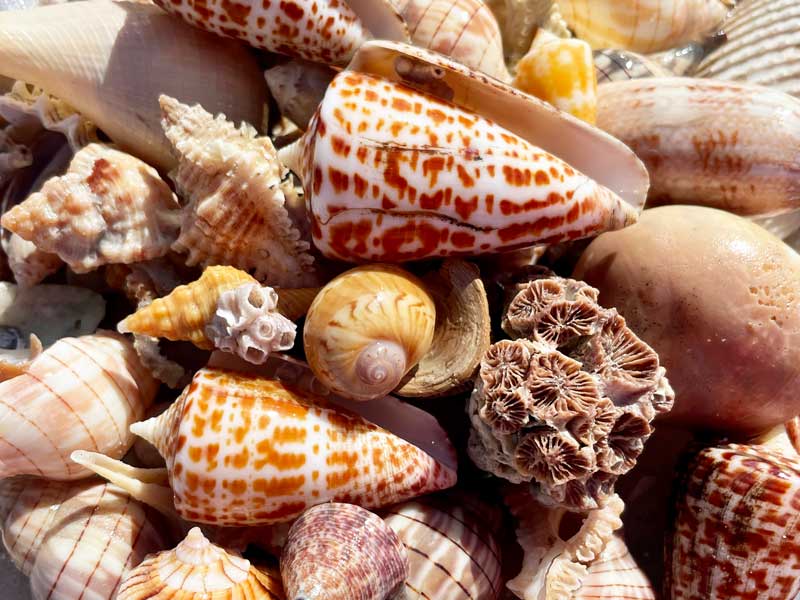
Alphabet Cones have been captivating beachcombers for centuries. These remarkably painted shells are among the most collectable due to their one-of-a-kind patterns. Similarly to snowflakes, it is believed that every Alphabet Cone is unique in its pattern and no two are the same.
The cones are named for their obvious conical shape featuring a short flattened spire at the top and narrowing to a small point at the open end forming a perfect cone. The aperture of these shells is quite thin making it very difficult to see the live snail inside.
Like most marine gastropods, cone shells reproduce by laying eggs. After the eggs have been fertilized and the babies hatch, they begin their life in the sea with a tiny shell on their back, already in place.
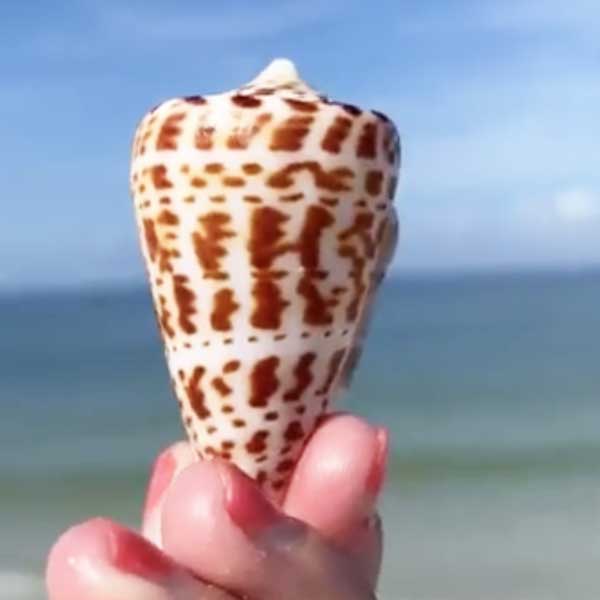
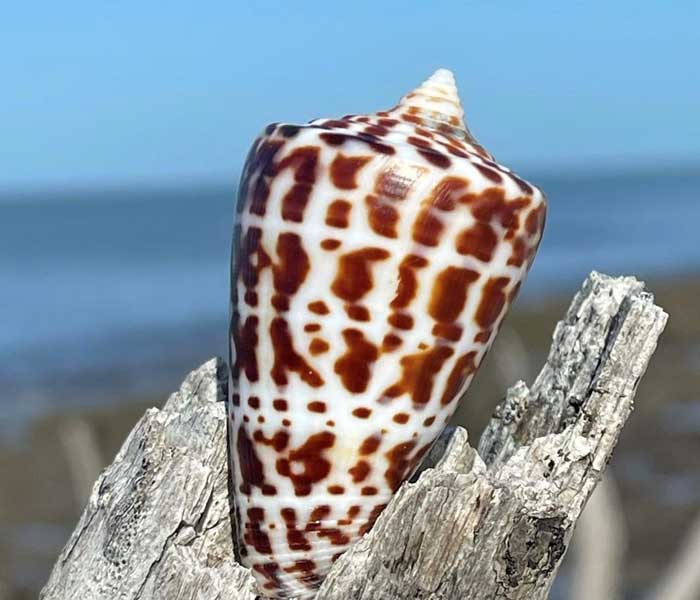
Images, punctuation marks, and most famously, letters of the English alphabet can be seen in the patterns on the Alphabet Cones. Some may even have entire words spelled out!
The orange splotches on each Alphabet Cone is unique to each shell making them very collectable. An especially sought-after color form is what’s referred to as a “Chocolate Cone” which features an uncommonly dark brown pattern rather than orange or yellow as they appear normally.
There are a plethora of cone species throughout the world and while many people are drawn to them, beachcombers should beware; most, if not all cone snails are venomous predators and can be dangerous if found alive. Some species native to the Pacific Ocean can cause fatalities with its sting.
In Florida however, the cone species’ toxicity is likened to a bee sting and while unpleasant, is unlikely to kill you. In Southwest Florida, there are several carnivorous marine mollusks and the Alphabet Cone is among the top predators. Possessing harpoon-like teeth, the cones insert venom into their prey, stunning them before consumption. Their prey include small marine animals like clams and other bivalves.
While it is unlikely to encounter a live cone snail in the Ten Thousand Islands, shellers should be cautious when picking one up for safety reasons.
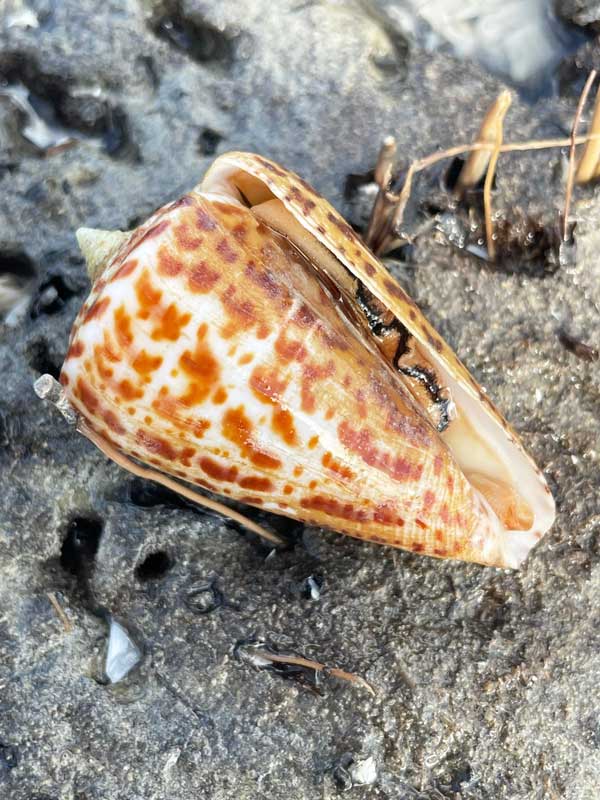
The live snail is bright yellow with a black stripe along the foot. The operculum of this species is a thin, elongated brown oval that does not fill the entire aperture space but protects the animal’s foot nonetheless. Like many other species, Alphabet Cones have an operculum made of a soft, brown horn-like material.
In the Ten Thousand Islands we have found many “fresh” Alphabet Cones that blend in to the dark mangrove peat due to this dirty looking periostracum. Because of this likelihood, we recommend scanning the shore for the shape as well as color when you are searching for them.
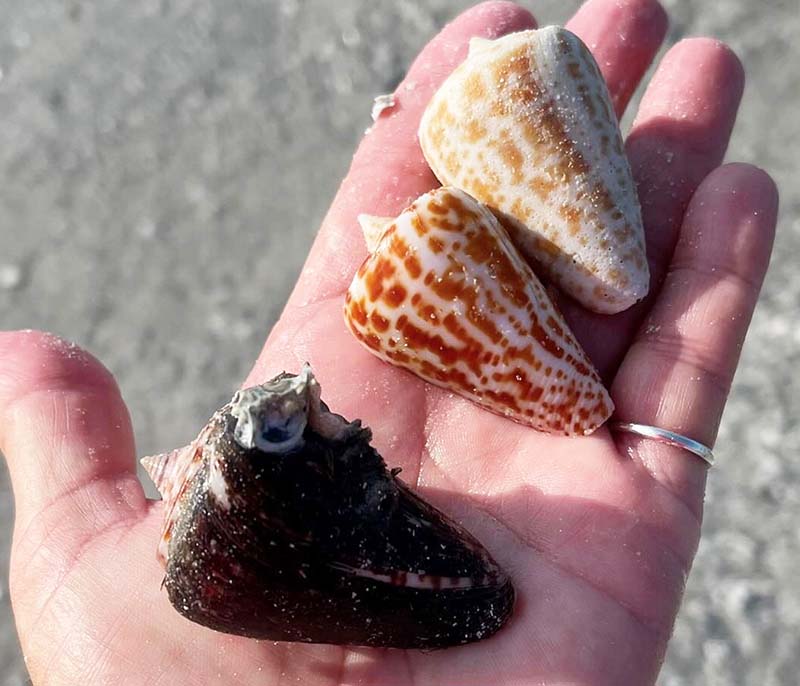
Golden Banded Cone
The world is full of odd animals that appear to be rare freaks of nature. The ocean’s inhabitants are no exception. Researchers are still studying the wonders of the sea and among them are the unusual cones referred to as the “Golden Banded Cones”.
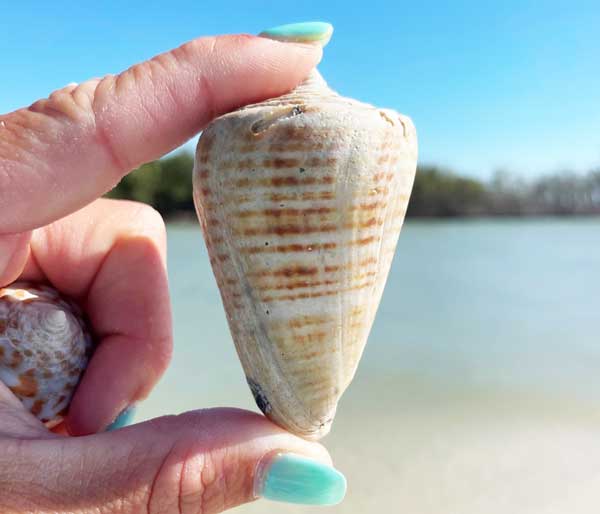
These are believed to be freak genetic variations of Alphabet Cones where the shells grow with bands (or stripes) around the belly of the shell rather than with the lettered splotches. Some scientists are debating they may be a completely separate species but that is still up for debate until a live specimen could be found and studied.
A Golden Banded Cone is considered one of the top-tier shells of rarity to find in Florida and on average they are only seen once every few years. More have been known to wash up after large storms like hurricanes. Due to their rarity, these freak shells are considered quite valuable in the shell-collecting world.
To learn more about these incredible shells and the other cone species one can find in Southwest Florida, check out our interview with the experts!
By – “Sarah with an H” Rosenbaum | Captain, Shell Guide, Florida Master Naturalist
🌊 Pro-Level Resources for Your Adventure
🛍️ Local Gear & Shell Displays: Shore Goods – Coastal Mercantile — Visit the shop at Marco Walk Plaza for sturdy beachcombing gear, shadow boxes, craft kits, and local artisan displays to showcase your treasures.
🎥 See the Action: Treasure Seekers YouTube Channel — See real-time conditions on remote sandbars before you step on board.
🌊 Local Tide Charts: NOAA Tides & Currents (Marco Island / Caxambas Pass) — Check real-time low tide predictions before planning your trip.
🌬 Wind & Weather Forecasts: NOAA Marine Forecast — Monitor wind direction to predict “blow-out” low tides.
🐚 Expert Identification: Bailey-Matthews National Shell Museum — The authoritative reference for identifying native Southwest Florida species.
🌿 Explore the Refuge: Ten Thousand Islands National Wildlife Refuge — Learn about the protected marine sanctuary we explore.
⚖️ Know the Rules: FWC Shelling Regulations — Review state guidelines for legal and responsible shelling.
🎒 What to Pack: Treasure Seekers Packing List — Gear up with essential water shoes, mesh bags, and sun protection.
🚤 Plan a Guided Trip: Ten Thousand Islands Shelling Tour — Book a guided excursion to remote barrier islands with expert naturalist captains.
🐚 Regional Tides & Shelling Guides: ShellingTours.com — Your go-to hub for Southwest Florida tide strategies, shelling conditions, and regional beachcombing advice.
💎 Rare Deep-Water Shell Identification: JunoniaShells.org — Learn the deep-water habitat, weather patterns, and boat-access secrets to finding the rare Scaphella junonia.
🎒 Essential Gear & Shell Care: Shellentials.com — Discover recommended mesh bags, sand scoops, reef-safe sun protection, and proper shell cleaning techniques.
🚤 Marco Island Departure Portal: MarcoIslandShellTours.com — Explore top-rated local boat charters departing straight from Marco Island and Goodland.
