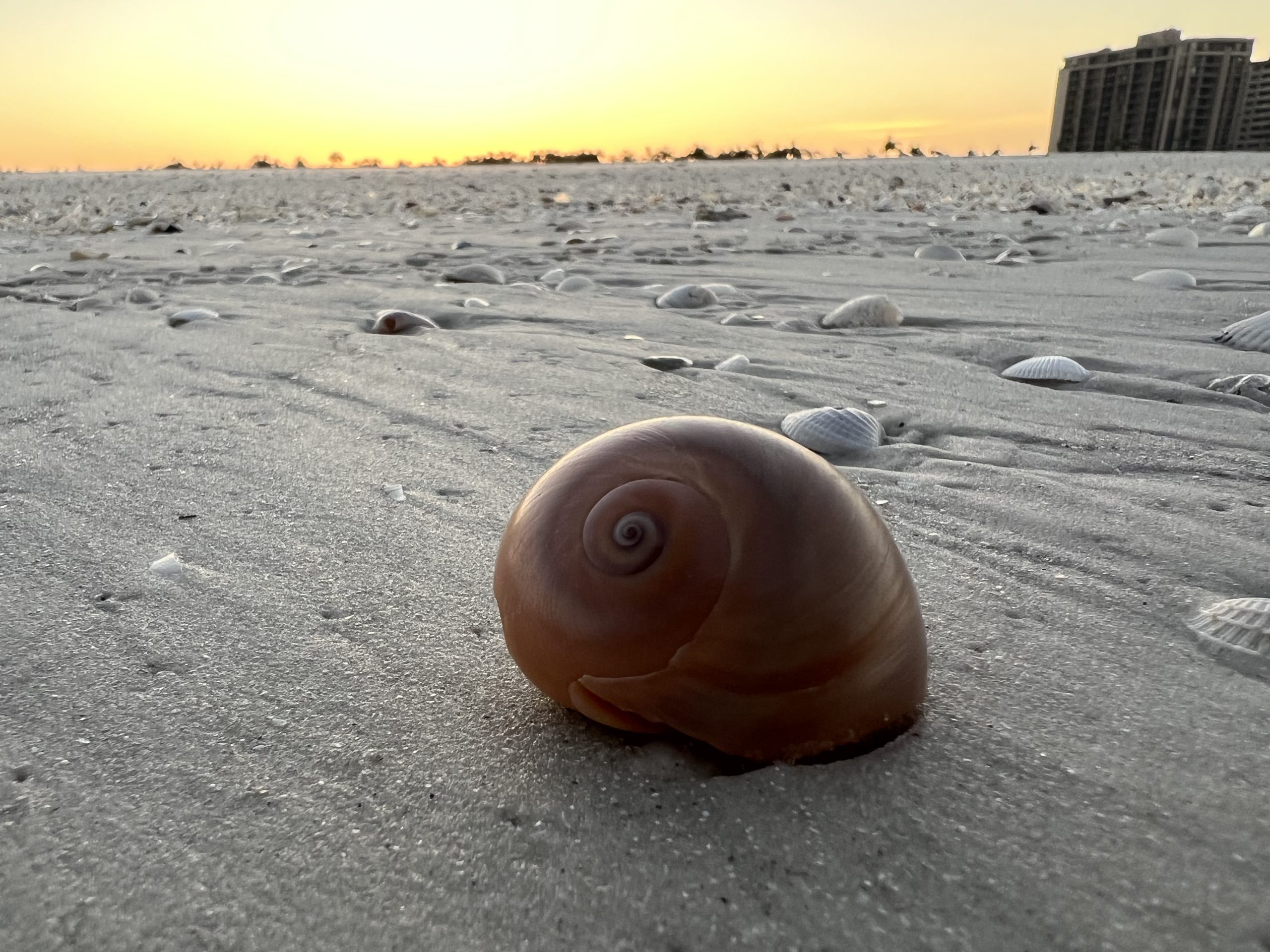
As a Florida Master Naturalist with Treasure Seekers Shell Tours, guiding enthusiastic shell seekers through the wild, untouched landscapes of the Ten Thousand Islands National Wildlife Refuge is what we live for. Shelling around Marco Island and its surrounding barrier islands offers an incredible window into Southwest Florida’s vibrant marine ecosystems.
Whether you are exploring public beaches or stepping onto remote sandbars, here is your insider’s guide to the top shelling locations around Marco Island, along with the fascinating ecology behind the shells you’ll find.
1. Tigertail Beach
Why It’s Special:
Tigertail Beach features a unique tidal lagoon separated from the Gulf of Mexico by a sweeping sand spit (Sand Dollar Island). The changing tides constantly alter the lagoon’s mouth, exposing tidal flats that trap treasures as the water retreats.
What to Look For:
-
Sand Dollars (Mellita tenuis): These keyhole urchins thrive in shallow, calm waters. Identification tip: Only collect white, non-fuzzy test exoskeletons. If it is dark, velvet-like, or fuzzy, it is alive and must stay in the water!
-
Lettered Olives (Oliva sayana): Cylindrical and glossy, these predatory snails burrow just beneath the surface of wet sandbars near tidal passes.
2. South Marco Beach
Why It’s Special:
Located at the southern end of the island, South Marco Beach sits near the mouth of Caxambas Pass. The strong tidal currents flushing through the pass push deeper-water Gulf species right onto the tide line.
What to Look For:
-
Lightning Whelks (Sinistrofulgur sinistrum): Famous for their left-handed (left-opening or sinistral) spiral, these predatory sea snails feed on bivalves like clams.
-
True Tulips & Banded Tulips (Cinctura species): Smooth, elegant gastropods with distinct swirling bands. Common misidentification: Banded Tulips have widely spaced, crisp dark lines, while True Tulips feature broken, intricate, vein-like patterns.
3. Hideaway Beach
Why It’s Special:
Tucked along the northwestern shore of Marco Island, this area faces Big Marco Pass. While much of Hideaway Beach is private, the surrounding tidal shoals near the pass carry rich marine life.
What to Look For:
-
Florida Prickly Cockles (Trachycardium egmontianum): Sturdy, heart-shaped bivalves with raised, prickly ribs. They are filter feeders that anchor themselves into shallow sandbars.
-
Fighting Conchs (Strombus alatus): Highly active herbivorous gastropods found in shallow seagrass beds and sand flats.
4. Keewaydin Island
Why It’s Special:
Located just north of Marco Island across Capri Pass, Keewaydin is an undeveloped barrier island accessible only by boat. Because there are no roads or foot bridges, the wave action along its pristine beaches rolls up raw shell piles away from mainland crowds.
What to Look For:
-
Apple Murex (Phyllonotus pomum): Heavy, rugged shells with dark brown blotches and rough textures. They live in shallow bay environments and prey on other mollusks.
-
Calico Scallops & Flat Scallops: Bright pink, orange, and white fan-shaped bivalves that wash ashore along the tide line.
5. Cape Romano & The Ten Thousand Islands
Why It’s Special:
Guarding the tip of Southwest Florida, Cape Romano marks the entryway to the vast Ten Thousand Islands National Wildlife Refuge. The convergence of Gulf currents, mangrove estuaries, and remote barrier islands creates prime conditions for incredible shell deposits.
What to Look For:
-
Florida Horse Conch (Triplofusus giganteus): Florida’s state shell and the largest gastropod in the American continent. These bright orange predators inhabit shallow flats and pass edges, preying on other large sea snails.
-
Alphabet Cones (Conotheca alpha / Conus spurcus): Striking cone shells featuring distinct rows of brown and yellow square-like markings resembling lettering.
Master Naturalist Tips for Ethical Shelling
-
Watch Tides & Winds: The absolute best time to shell is during a low spring tide or right after a strong winter cold front pushes water out off the sandbars.
-
Never Collect Live Shells: Live collecting is illegal in Collier County and harms our fragile ecosystem. Always check the interior of a shell or the opening of a sea snail. If an animal is inside, gently place it back into warm, shallow water.
-
Respect Fragile Habitats: Step carefully around seagrass beds, oyster bars, and mangrove shorelines. These nursery areas must be protected for future generations.
-
Gear Up Properly: Bring a breathable mesh shell bag that lets sand and water drain, sturdy closed-toe water shoes for oyster rocks, and reef-safe sun protection.
Go Deeper into the Refuge
While public beaches offer fun searching, the most pristine, uncrowded shelling lies miles off the mainland on uninhabited barrier islands and tidal flats.
Don’t just go — go with Treasure Seekers.
🌊 PRO-LEVEL RESOURCES FOR YOUR ADVENTURE
🛍️ Local Gear & Shell Displays: Shore Goods – Coastal Mercantile — Visit the shop at Marco Walk Plaza for sturdy beachcombing gear, shadow boxes, craft kits, and local artisan displays to showcase your treasures.
🎥 See the Action: Treasure Seekers YouTube Channel — See real-time conditions on remote sandbars before you step on board.
🌊 Local Tide Charts: NOAA Tides & Currents (Marco Island / Caxambas Pass) — Check real-time low tide predictions before planning your trip.
🌬 Wind & Weather Forecasts: NOAA Marine Forecast — Monitor wind direction to predict “blow-out” low tides.
🐚 Expert Identification: Bailey-Matthews National Shell Museum — The gold standard for identifying native Southwest Florida species.
🌿 Explore the Refuge: Ten Thousand Islands National Wildlife Refuge — Learn about the protected marine sanctuary we explore.
⚖️ Know the Rules: FWC Shelling Regulations — Review state guidelines for legal and responsible shelling.
🎒 What to Pack: Treasure Seekers Packing List — Gear up with essential water shoes, mesh bags, and sun protection.
🚤 Plan a Guided Trip: Ten Thousand Islands Shelling Tour — Book a guided excursion to remote barrier islands with expert naturalist captains.
🐚 Regional Tides & Shelling Guides: ShellingTours.com — Your go-to hub for Southwest Florida tide strategies, shelling conditions, and regional beachcombing advice.
💎 Rare Deep-Water Shell Identification: JunoniaShells.org — Learn the deep-water habitat, weather patterns, and boat-access secrets to finding the rare Scaphella junonia.
🎒 Essential Gear & Shell Care: Shellentials.com — Discover recommended mesh ba
🚤 Marco Island Departure Portal: MarcoIslandShellTours.com — Explore top-rated local boat charters departing straight from Marco Island and Goodland.
