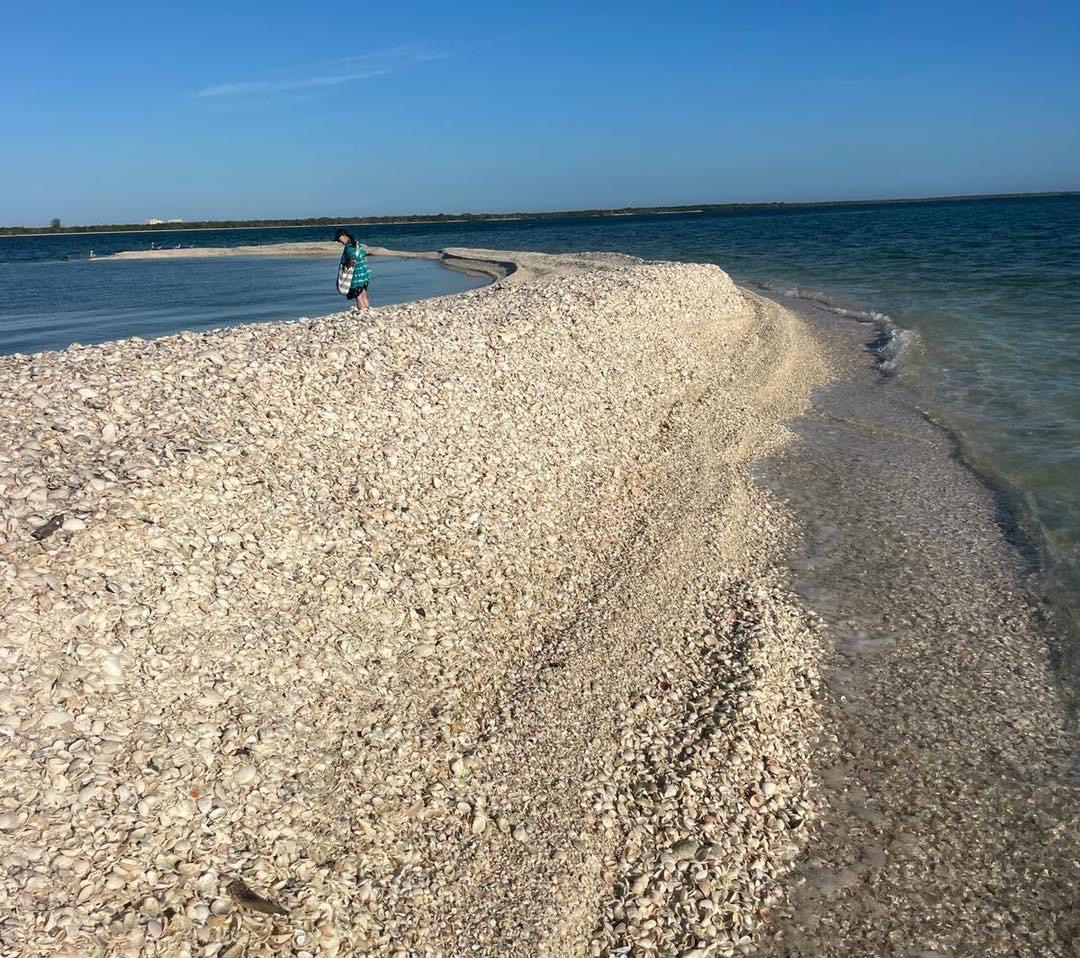
-
- Tools and Weapons: Calusa artisans fashioned sharp-edged tools from conch and whelk shells, used for cutting, scraping, and carving. They even crafted formidable weapons, like shell hammers and gouges.
-
- Ceremonial Objects: Shells held spiritual significance, used in rituals and ceremonies. Ornate shell masks and pendants adorned tribal leaders, symbolizing status and power.
-
- Building Materials: Crushed shells were mixed with other materials to create sturdy platforms and mounds, providing elevated living spaces and ceremonial sites.
-
- Artifacts: When visiting the Mound Key Archaeological State Park, or the Randell Research Center you can see the evidence of the Calusa people and their ingenious use of shells.
-
- Early Collectors: During the 18th and 19th centuries, wealthy Europeans and Americans sought exotic shells for their curiosity cabinets. Florida, with its abundant marine life, became a prime destination for shell enthusiasts.
-
- The Shell Trade: As tourism grew, the shell trade flourished. Souvenir shops popped up along coastal towns, offering an array of shells, shell crafts, and shell jewelry.
-
- Vintage Shell Crafts: In the mid-20th century, shell crafting reached its peak. Elaborate shell lamps, mirrors, and figurines adorned homes and businesses, reflecting the kitschy charm of the era.
-
- Shell Museums: Places like the Bailey-Matthews National Shell Museum on Sanibel Island highlight the diversity and beauty of shells, as well as the scientific and cultural importance.
-
- Responsible Shelling: Collect only empty, deceased shells, leaving live shells and their habitats undisturbed.
-
- Educational Opportunities: Shelling provides an opportunity to learn about marine life, coastal ecosystems, and the history of Florida.
-
- Personal Connection: For many, shelling is a way to connect with nature, find tranquility, and create lasting memories.
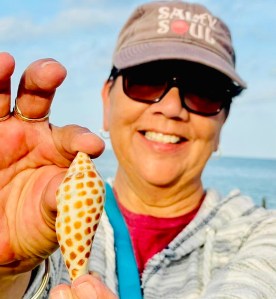 On a sunrise tour last season, one of our guests—a woman celebrating her 50th birthday—spotted something unusual peeking from the surf. As she pulled it out, we all gasped—it was a perfect, unbroken Junonia! The joy on her face was unforgettable. To this day, she calls it her “golden birthday treasure.”
2. Lightning Whelk (Sinistrofulgur sinistrum)
Scientific Facts: This spiral shell is unique because it coils to the left instead of the right. Historically, indigenous peoples used it as a tool and ceremonial object.
I once found a massive lightning whelk on Morgan Beach after a summer storm. Holding it, I imagined the Calusa using similar shells as drinking vessels or weapons. Moments like that make shelling more than a hobby—it’s a connection to history.
3. Alphabet Cone (Conus spurius)
Scientific Facts: This shell is known for its intricate, alphabet-like markings. However, live cone snails are venomous, using a harpoon-like tooth to paralyze prey.
A young sheller on one of our tours once ran up with an excited grin, clutching an Alphabet Cone. It was gorgeous—but it was still alive! I gently explained why we should leave live shells in their habitat. She nodded, placed it back in the sand, and later told me, “I feel like I just helped nature!” Moments like these show how education fosters conservation.
4. Horse Conch (Triplofusus giganteus)
Scientific Facts: Florida’s state shell, the Horse Conch, can grow over two feet long! These predatory snails feed on other mollusks, including smaller whelks and tulip shells.
I once found a live horse conch in the shallows of Dickman’s Point, its bright orange body exposed. Watching it slowly move across the sand was mesmerizing—a reminder that shells aren’t just treasures; they are homes to living creatures.
5. Tulip Shell (Fasciolaria tulipa)
Scientific Facts: Tulip shells are beautifully banded and often confused with their smaller cousin, the banded tulip. They are active predators, feeding on clams and even other gastropods.
A father and daughter on one of our eco-tours found a pristine tulip shell half-buried in the sand. The little girl held it up like a trophy, beaming. “This is going on my shell shelf!” she announced. It was a touching moment—proof that shelling is a tradition passed through generations.
Take the Shell Seeker’s Pledge
Shell collecting is a privilege, and we must do our part to protect these natural treasures. Join us in responsible shelling!
Take the #ShellSeekersPledge! Comment ‘I pledge’ if you commit to responsible shelling and preserving Florida’s coastal treasures for future generations.
How You Can Help:
✅ Collect only empty shells—leave live ones behind.
✅ Avoid disturbing sand dunes and protected nesting areas.
✅ Follow local shelling regulations.
✅ Educate fellow beachgoers on ethical shelling.
✅ Book a guided shelling tour to learn more about the ecosystem.
The Legacy Continues…
From ancient tools to cherished keepsakes, shells have shaped Florida’s history for thousands of years. By embracing responsible shelling practices, we ensure future generations can experience the same joy of discovering a perfect shell along our beautiful shores.
On a sunrise tour last season, one of our guests—a woman celebrating her 50th birthday—spotted something unusual peeking from the surf. As she pulled it out, we all gasped—it was a perfect, unbroken Junonia! The joy on her face was unforgettable. To this day, she calls it her “golden birthday treasure.”
2. Lightning Whelk (Sinistrofulgur sinistrum)
Scientific Facts: This spiral shell is unique because it coils to the left instead of the right. Historically, indigenous peoples used it as a tool and ceremonial object.
I once found a massive lightning whelk on Morgan Beach after a summer storm. Holding it, I imagined the Calusa using similar shells as drinking vessels or weapons. Moments like that make shelling more than a hobby—it’s a connection to history.
3. Alphabet Cone (Conus spurius)
Scientific Facts: This shell is known for its intricate, alphabet-like markings. However, live cone snails are venomous, using a harpoon-like tooth to paralyze prey.
A young sheller on one of our tours once ran up with an excited grin, clutching an Alphabet Cone. It was gorgeous—but it was still alive! I gently explained why we should leave live shells in their habitat. She nodded, placed it back in the sand, and later told me, “I feel like I just helped nature!” Moments like these show how education fosters conservation.
4. Horse Conch (Triplofusus giganteus)
Scientific Facts: Florida’s state shell, the Horse Conch, can grow over two feet long! These predatory snails feed on other mollusks, including smaller whelks and tulip shells.
I once found a live horse conch in the shallows of Dickman’s Point, its bright orange body exposed. Watching it slowly move across the sand was mesmerizing—a reminder that shells aren’t just treasures; they are homes to living creatures.
5. Tulip Shell (Fasciolaria tulipa)
Scientific Facts: Tulip shells are beautifully banded and often confused with their smaller cousin, the banded tulip. They are active predators, feeding on clams and even other gastropods.
A father and daughter on one of our eco-tours found a pristine tulip shell half-buried in the sand. The little girl held it up like a trophy, beaming. “This is going on my shell shelf!” she announced. It was a touching moment—proof that shelling is a tradition passed through generations.
Take the Shell Seeker’s Pledge
Shell collecting is a privilege, and we must do our part to protect these natural treasures. Join us in responsible shelling!
Take the #ShellSeekersPledge! Comment ‘I pledge’ if you commit to responsible shelling and preserving Florida’s coastal treasures for future generations.
How You Can Help:
✅ Collect only empty shells—leave live ones behind.
✅ Avoid disturbing sand dunes and protected nesting areas.
✅ Follow local shelling regulations.
✅ Educate fellow beachgoers on ethical shelling.
✅ Book a guided shelling tour to learn more about the ecosystem.
The Legacy Continues…
From ancient tools to cherished keepsakes, shells have shaped Florida’s history for thousands of years. By embracing responsible shelling practices, we ensure future generations can experience the same joy of discovering a perfect shell along our beautiful shores.
Become an expert sheller: Choose Treasure Seekers Shell Tours for an educational and responsible experience.
What’s your most memorable shelling find? Share your story in the comments!DON’T JUST GO—GO WITH TREASURE SEEKERS SHELL TOURS
Here’s the difference: anyone can walk the beach. But with us, you’ll be in the right place, at the exact right time, with Florida Master Naturalists who know not just where to go—but why. We’ll help you identify your finds, share the history and ecology behind every shell, and ensure your adventure leaves the ecosystem better than you found it. ➡️ Book your Marco Island shelling tour now, and let this fall’s tides change your collection forever.🌊 PRO-LEVEL RESOURCES FOR YOUR ADVENTURE
🛍️ Local Gear & Shell Displays: Shore Goods – Coastal Mercantile — Visit the shop at Marco Walk Plaza for sturdy beachcombing gear, shadow boxes, craft kits, and local artisan displays to showcase your treasures.
🎥 See the Action: Treasure Seekers YouTube Channel — See real-time conditions on remote sandbars before you step on board.
🌊 Local Tide Charts: NOAA Tides & Currents (Marco Island / Caxambas Pass) — Check real-time low tide predictions before planning your trip.
🌬 Wind & Weather Forecasts: NOAA Marine Forecast — Monitor wind direction to predict “blow-out” low tides.
🐚 Expert Identification: Bailey-Matthews National Shell Museum — The gold standard for identifying native Southwest Florida species.
🌿 Explore the Refuge: Ten Thousand Islands National Wildlife Refuge — Learn about the protected marine sanctuary we explore.
⚖️ Know the Rules: FWC Shelling Regulations — Review state guidelines for legal and responsible shelling.
🎒 What to Pack: Treasure Seekers Packing List — Gear up with essential water shoes, mesh bags, and sun protection.
🚤 Plan a Guided Trip: Ten Thousand Islands Shelling Tour — Book a guided excursion to remote barrier islands with expert naturalist captains.
🐚 Regional Tides & Shelling Guides: ShellingTours.com — Your go-to hub for Southwest Florida tide strategies, shelling conditions, and regional beachcombing advice.
💎 Rare Deep-Water Shell Identification: JunoniaShells.org — Learn the deep-water habitat, weather patterns, and boat-access secrets to finding the rare Scaphella junonia.
🎒 Essential Gear & Shell Care: Shellentials.com — Discover recommended mesh bags, sand scoops, reef-safe sun protection, and proper shell cleaning techniques.
🚤 Marco Island Departure Portal: MarcoIslandShellTours.com — Explore top-rated local boat charters departing straight from Marco Island and Goodland.
