The first time I saw a Wilson’s Plover chick take its first wobbly steps along the sand, I knew these tiny birds faced enormous challenges. Their survival depends on our awareness and protection. Here’s how you can help.
As a Florida Master Naturalist and shell tour guide with Treasure Seekers Shell Tours, I’ve had the privilege of witnessing the extraordinary beauty of Southwest Florida’s coastline. But I’ve also seen firsthand the delicate balance of this ecosystem, a balance that requires our constant vigilance.
The coastal ecosystems of Southwest Florida, particularly Rookery Bay, are vital nesting habitats for numerous shorebird species. As stewards of these delicate environments, we must understand and actively participate in their preservation. This post addresses the seasonal closures and conservation efforts vital to the success of these avian residents.
Understanding Critical Wildlife Areas (CWAs) The Florida Fish and Wildlife Conservation Commission (FWC), the leading authority on wildlife conservation in our state, has designated areas like Second Chance Island in Rookery Bay as Critical Wildlife Areas (CWAs). This designation isn’t given lightly. It signifies areas of vital importance for imperiled species, particularly shorebirds during their nesting season.
This opportunity to witness these shorebirds in their natural nesting habitat is limited. Second Chance Island is closed from March 1st to August 31st. This closure is crucial for the survival of species like the Wilson’s Plover, whose camouflaged nests are incredibly vulnerable. These birds are facing increasing pressures, making these protected areas more important than ever.
Every year, countless dedicated volunteers and conservationists, including those at Audubon Florida, work tirelessly to protect these nesting sites. They understand the importance of giving these birds a safe haven. When you respect the closures and follow the guidelines, you’re joining a community of individuals who are making a real difference.
As a Master Naturalist, I can tell you that the impact of human disturbance on these birds is significant. Even a brief intrusion can cause parents to abandon their nests, leaving eggs and chicks vulnerable to predators. The FWC’s regulations are in place to prevent this, and they have the authority to enforce them.
Designated by the Florida Fish and Wildlife Conservation Commission (FWC), Critical Wildlife Areas (CWAs) are established to safeguard imperiled species, especially during sensitive nesting periods. Rookery Bay, managed in collaboration with Audubon Florida, hosts five such CWAs. Second Chance Island, currently closed from March 1st to August 31st, serves as a crucial nesting site.
Unique Shorebird Residents
• Wilson’s Plovers: These solitary nesters exhibit remarkable camouflage, blending seamlessly with the sandy terrain. Interesting Fact: Wilson’s Plovers often create multiple shallow scrapes in the sand before selecting a final nest site, a behavior known as “nest-scraping.” Their vulnerability to disturbance necessitates strict adherence to CWA closures.
• Least Terns: These small, agile birds are colony nesters, forming dense groups for breeding. Interesting Fact: Least Terns are known for their “plunge-diving” technique, where they dive headfirst into the water to catch small fish. Their communal nesting makes them susceptible to large-scale disturbances.
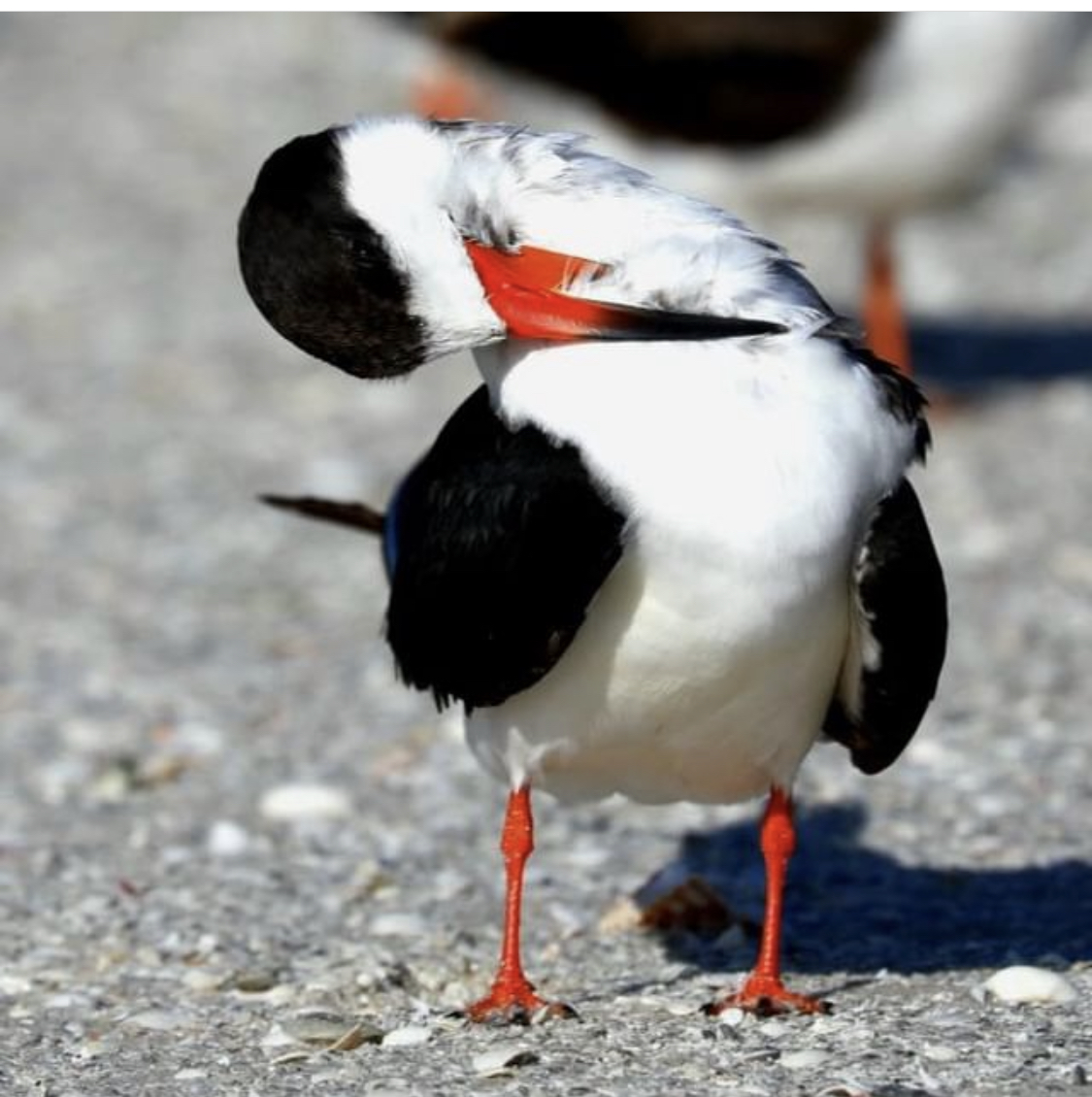
• Black Skimmers: With their distinctive elongated mandibles, Black Skimmers employ a unique feeding strategy. Interesting Fact: Black Skimmers “skim” the water’s surface, dipping their lower mandible to catch small fish. Their specialized bill is a remarkable adaptation. These birds also form colonies, requiring undisturbed nesting environments.
Conservation Efforts and Responsible Practices The seasonal closure of Second Chance Island and the “Do Not Enter” signs on beaches throughout the Cape Romano complex, including Morgan beaches and Dickman’s Shoals, are essential for shorebird protection. Adherence to these guidelines is paramount.
Responsible Shelling During Nesting Season Even on beaches outside designated CWAs, responsible shelling practices are imperative:
• Minimize digging to avoid disturbing hidden nests.
• Refrain from walking in dunes or vegetation, which are often used for nesting.
• Maintain a respectful distance from shorebirds, observing them without intrusion.
• Be aware of your surroundings, and avoid nesting locations.
#RookeryBayShorebirds, #ShorebirdConservation, #FloridaWildlife, #TreasureSeekersShellTours, #CoastalEcosystems.
We encourage all visitors to Southwest Florida’s beaches to respect these guidelines, ensuring the continued success of shorebird nesting. By working together, we can protect these invaluable coastal ecosystems.
#Shorebirds #FloridaNature #Conservation #BeachLife #TravelFlorida
Guardians of the Shore: Supporting Shorebird Nesting in Rookery Bay These nesting sites are precious and fragile. The “Do Not Enter” signs on beaches throughout the Cape Romano complex, including Morgan beaches and Dickman’s Shoals, are reminders that these areas are not limitless. We must act now to protect them.
Many of our guests at Treasure Seekers Shell Tours have expressed their appreciation for learning about these conservation efforts. They understand that responsible tourism means respecting the environment. By choosing to support businesses that prioritize conservation, you’re contributing to a sustainable future for these incredible birds.
The window of opportunity to make a difference is now. The nesting season is underway, and every action counts. By avoiding closed areas, respecting posted signs, and practicing responsible beach behavior, you’re playing a crucial role in protecting these vulnerable shorebirds.
Join the community of protectors: Take the #ShorebirdProtector pledge! Comment ‘I pledge’ below if you’re committed to responsible beach behavior. Let’s see how many of us can make a difference this nesting season!
Don’t miss this limited opportunity: Visit the FWC and Audubon Florida websites to learn more about how you can help.
Become an informed advocate: Choose Treasure Seekers Shell Tours for an educational and responsible experience.
Act now: Respect the closures and practice responsible beach behavior to ensure the survival of these precious shorebirds.
DON’T JUST GO—GO WITH TREASURE SEEKERS SHELL TOURS
Here’s the difference: anyone can walk the beach. But with us, you’ll be in the right place, at the exact right time, with Florida Master Naturalists who know not just where to go—but why.
We’ll help you identify your finds, share the history and ecology behind every shell, and ensure your adventure leaves the ecosystem better than you found it.
⚠️ A word of warning: Our top-pick dates book first, especially Nov. 7. If you wait, someone else will claim the shells you were meant to find.
➡️ Book your Marco Island shelling tour now, and let this fall’s tides change your collection forever.
Visit our YouTube channel for more insights into shelling in the Ten Thousand Islands: Shelling with Treasure Seekers Shell Tours.
